
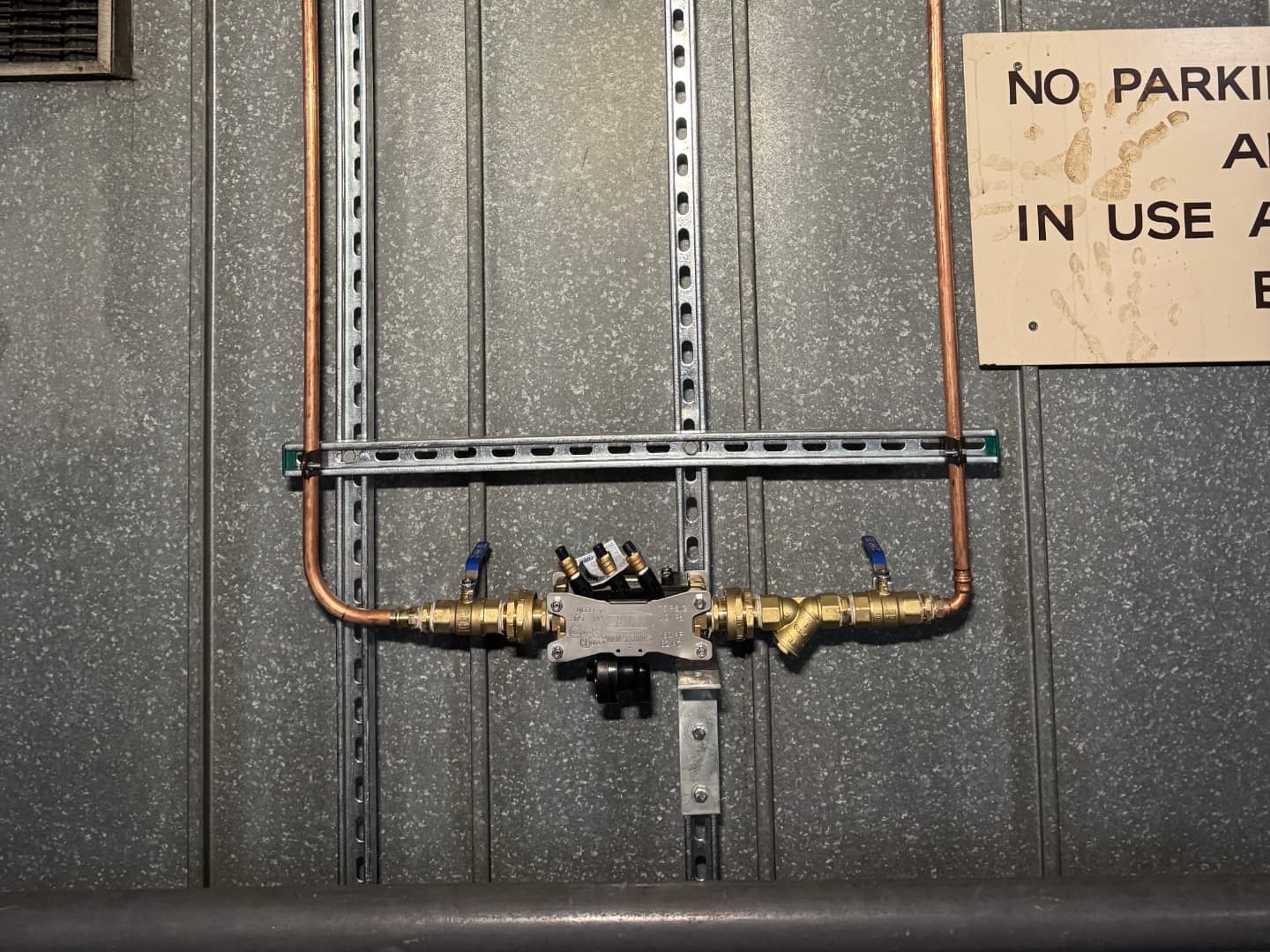
RPZD — reduced pressure zone device
Used where a high-hazard cross-connection has to be protected. A testable device, so it is tested at installation and on the required ongoing interval.
Backflow prevention · Sydney
Backflow testing, installation, repair and replacement for commercial, strata and industrial premises across Sydney. Joel Polifroni is an accredited backflow tester and carries out the testing himself.
Field testing of testable devices follows AS/NZS 2845.3:2020, the current field testing and maintenance standard for testable backflow prevention devices, with test paperwork supplied for your records.
Why it matters
Drinking water is meant to travel one way — from the main into the property. Backflow is the opposite: water drawn or pushed back out of a property and into the supply, which can happen when supply pressure drops or when a downstream pressure rises. If that water has been in contact with chemicals, process water, waste, irrigation soil, a tank or a cooling system, it can contaminate the drinking water for the property and for others on the same main.
Backflow prevention puts a controlled barrier between the two. The appropriate form of protection depends on the hazard classification and on the installation, which is why devices are selected against the actual risk on site rather than by habit.
Device types
Used where a high-hazard cross-connection has to be protected. A testable device, so it is tested at installation and on the required ongoing interval.
Used for lower-hazard applications. Testable versions are field tested; non-testable versions are assessed differently.
Commonly used on fire services where unauthorised water use also needs to be detectable.
A physical separation between the water supply and the receiving vessel, used where an air gap is the appropriate protection.
Used where supply must be separated from the site's system through a tank rather than a valve arrangement.
Sydney Water containment requirements
Where Sydney Water containment requirements apply, testable high- and medium-hazard containment devices require testing when installed and annually thereafter, performed by an appropriately accredited backflow plumber.
That is not a blanket rule for every device in every application. Some installations are protected by arrangements that are not field tested the same way, and registration or lodgement obligations only apply to the situations the water authority actually requires them for. We tell you which of those applies to your property instead of applying the strictest case to everything.
How we work
The appropriate form of backflow protection depends on the hazard classification and on the installation itself. That is assessed before anything is specified.
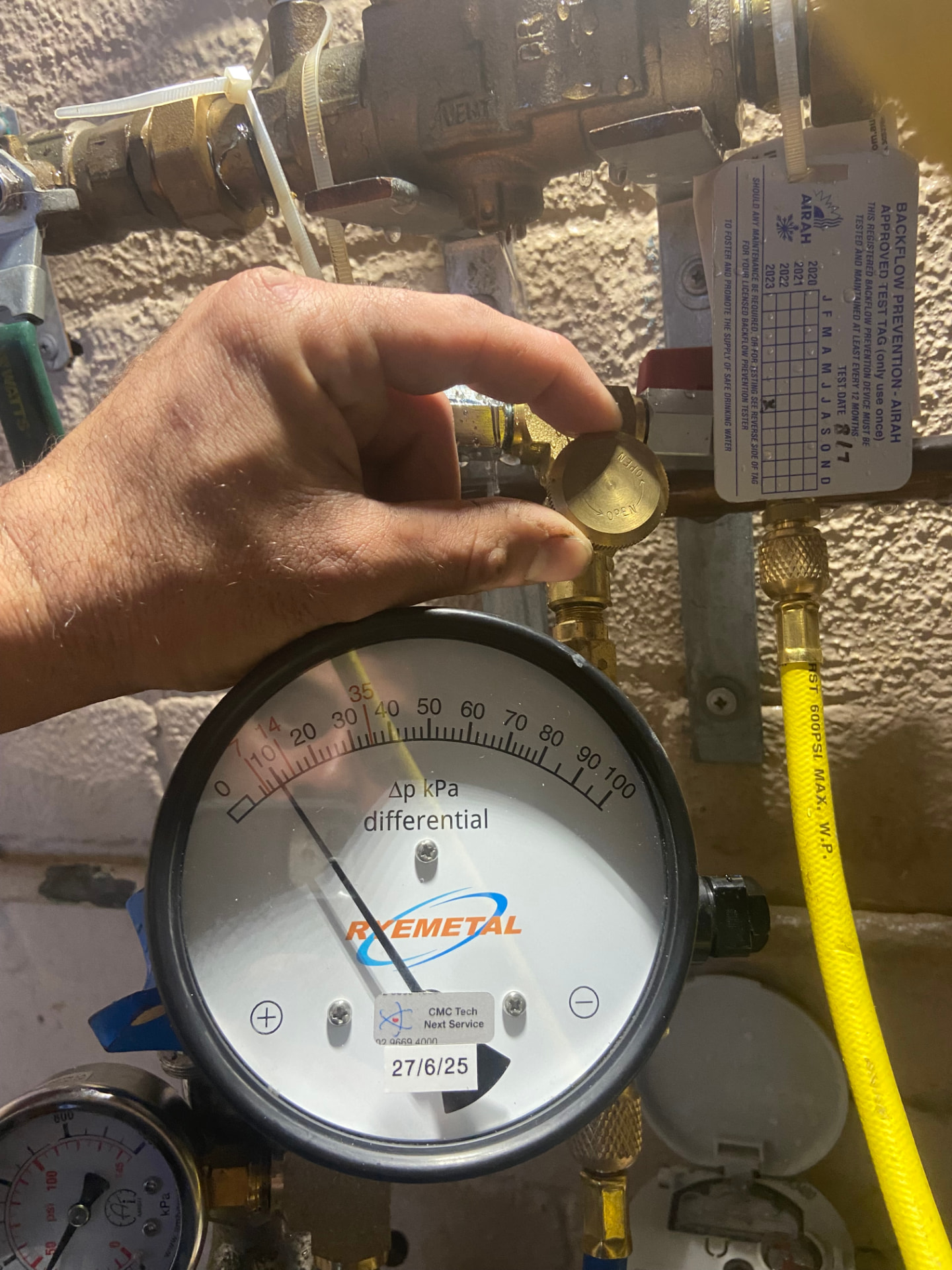
Testable devices are field tested with calibrated gauges in line with AS/NZS 2845.3:2020, the current field testing and maintenance standard for testable backflow prevention devices.
Where a device fails, the fault is explained and the device is repaired or replaced, then retested so the result on record is a pass.
Test results are provided for your compliance file, and lodged with the water authority where that genuinely applies to your installation.
Scope of work
Where it applies
Related services
Frequently asked questions
Backflow is water flowing the wrong way — back out of a property and into the drinking water supply. If that water has picked up chemicals, waste or stagnant water on the way, it can contaminate the supply, which is why backflow prevention exists.
It depends on the hazard classification and the installation. A high-hazard cross-connection needs different protection from a low-hazard one, so the installation is assessed rather than assumed.
It depends on the device and the application — not every device in every application requires annual testing. Where Sydney Water containment requirements apply, testable high- and medium-hazard containment devices require testing when installed and annually thereafter, performed by an appropriately accredited backflow plumber.
Joel Polifroni is an accredited backflow tester and carries out the testing himself, so the person on site is the person signing the test results.
The fault is explained, the device is repaired or replaced depending on its condition and suitability, and it is retested so the recorded result is a pass.