Pipe relining · No-dig repairs · Sydney
Pipe relining Sydney
Repair suitable cracked, root-affected or minor-displacement drainage defects from within, reducing the need to excavate established surfaces where the pipe condition allows it.
Prevail Plumbing uses CCTV inspection before relining to assess the pipe, then CCTV after relining to confirm the completed repair through the lined section.
Drain relining
Repairing the pipe from the inside
Pipe relining creates a new structural lining inside a suitable existing drain. It can provide a practical alternative to excavation for cracks, root intrusion, localised holes and selected minor displacement where the pipe can still be cleaned, prepared and lined correctly.
Every drain must be inspected and assessed first. Relining is not appropriate for every defect, and excavation or conventional replacement may still be required where the pipe has collapsed, severely displaced, lost shape, has access limitations or cannot be properly prepared.
Assessment first
When pipe relining may be suitable
- Cracked drainage pipes
- Tree-root intrusion through pipe joints
- Minor displacement where the pipe can still be prepared and lined
- Localised holes or pipe-wall deterioration
- Leaking joints
- Ageing earthenware or suitable existing drainage
- Recurring blockages caused by structural defects
- Defects beneath driveways, paving or landscaping
- Difficult-to-access drainage sections
- Selected sewer and stormwater defects where technically suitable
No-dig pipe repair process
How the relining process works
The installation and curing method depends on the pipe, defect, access and approved scope. A typical CCTV-assessed pipe relining Sydney repair may involve these stages.
- 01
CCTV inspection
Inspect the drainage line to identify the defect, pipe condition, access points and surrounding junctions.
- 02
Cleaning and preparation
Remove obstructions, roots and deposits as required so the pipe can be properly assessed and prepared.
- 03
Measurement and repair planning
Confirm the pipe dimensions, repair length and whether a sectional repair or longer liner is appropriate.
- 04
Liner preparation and installation
Prepare the resin-impregnated liner and install it into the existing pipe using the appropriate relining method.
- 05
Curing and reinstatement
Allow the liner to cure and reinstate applicable connections or junctions where they form part of the agreed scope and the required equipment is available.
- 06
Final CCTV inspection
Inspect the completed lining internally and document the finished repair.
Benefits
Why relining may be the better repair
No-dig repair can be practical where the pipe is suitable, but limited excavation or access work may occasionally be required.
- Less excavation where the pipe and site are suitable
- Reduced disturbance to established surfaces
- Repairs difficult-to-access pipe sections
- Creates a continuous lining through the repaired section
- Can address recurring defects caused by cracks or root entry
- Suitable for selected residential, strata and commercial drainage
- CCTV inspection before and after the repair supports the recommendation and completed result
- Final CCTV inspection provides visual confirmation of the completed work
Repair options
Relining or conventional replacement?
We inspect the drain first and explain whether relining, a local excavation or conventional pipe replacement is the more appropriate repair.
- The type and condition of the existing pipe
- Whether the pipe has retained its shape
- The extent and location of damage
- Available access points
- Pipe diameter and changes in direction
- Connections and junctions
- The ability to clean and prepare the pipe
- The surfaces located above the damaged section
- Cost and long-term practicality
Sectional pipe repair
The repair should match the defect
Some drainage problems may require a targeted sectional repair, while longer damaged sections may require a more extensive liner. The recommended repair length should be based on CCTV evidence and the condition of the surrounding pipe—not simply the most expensive available option.
Applications
Where pipe relining can be considered
Sewer pipe relining and suitable stormwater repairs are assessed case by case, including pipe material, access, diameter and the agreed repair scope.
- Houses
- Apartment and strata buildings
- Commercial premises
- Schools and facilities
- Driveways and landscaped areas
- Internal or difficult-access drainage
- Sewer drainage
- Suitable stormwater drainage
- Common-property pipework
- Selected construction and refurbishment projects
Genuine project evidence
Relining equipment in action
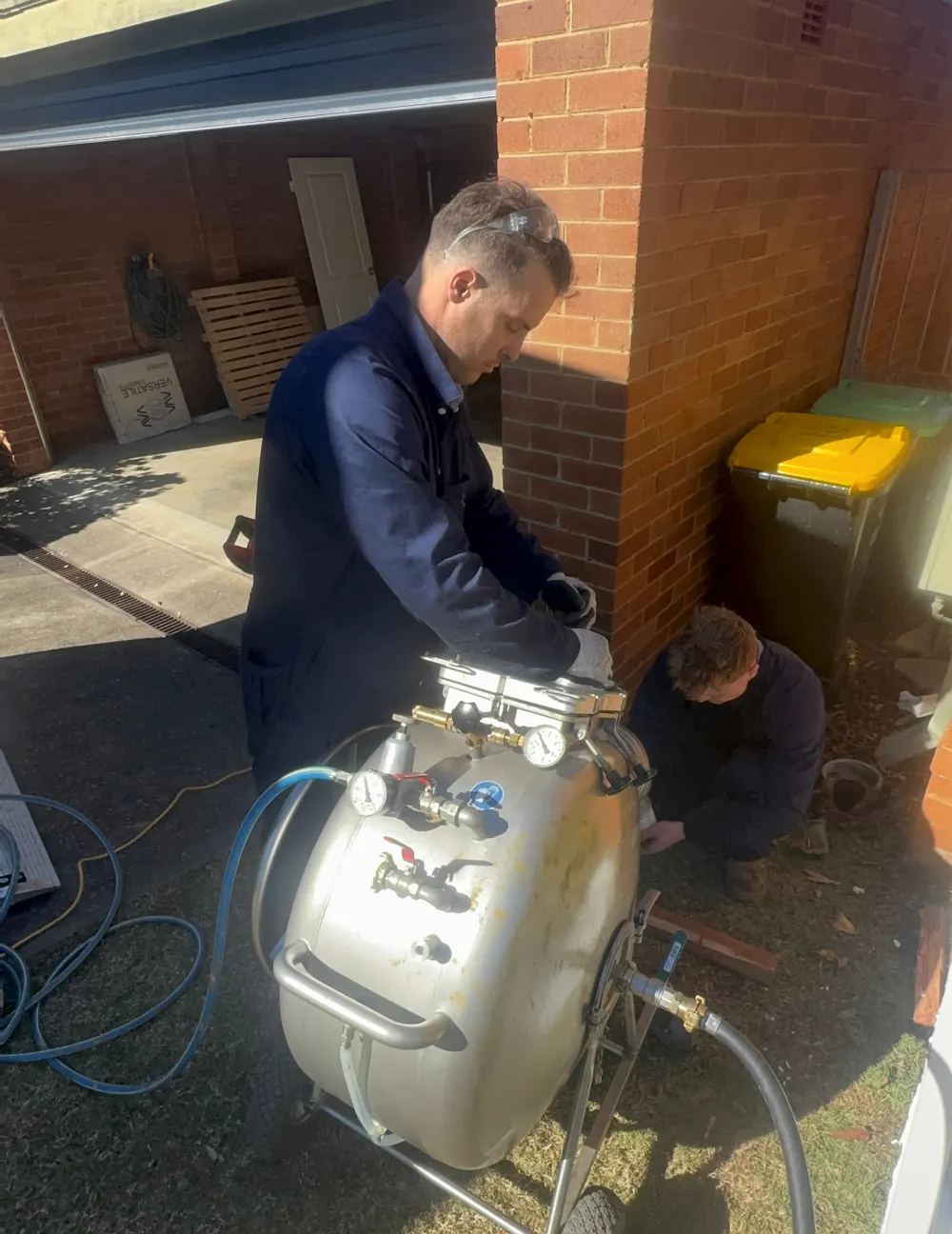
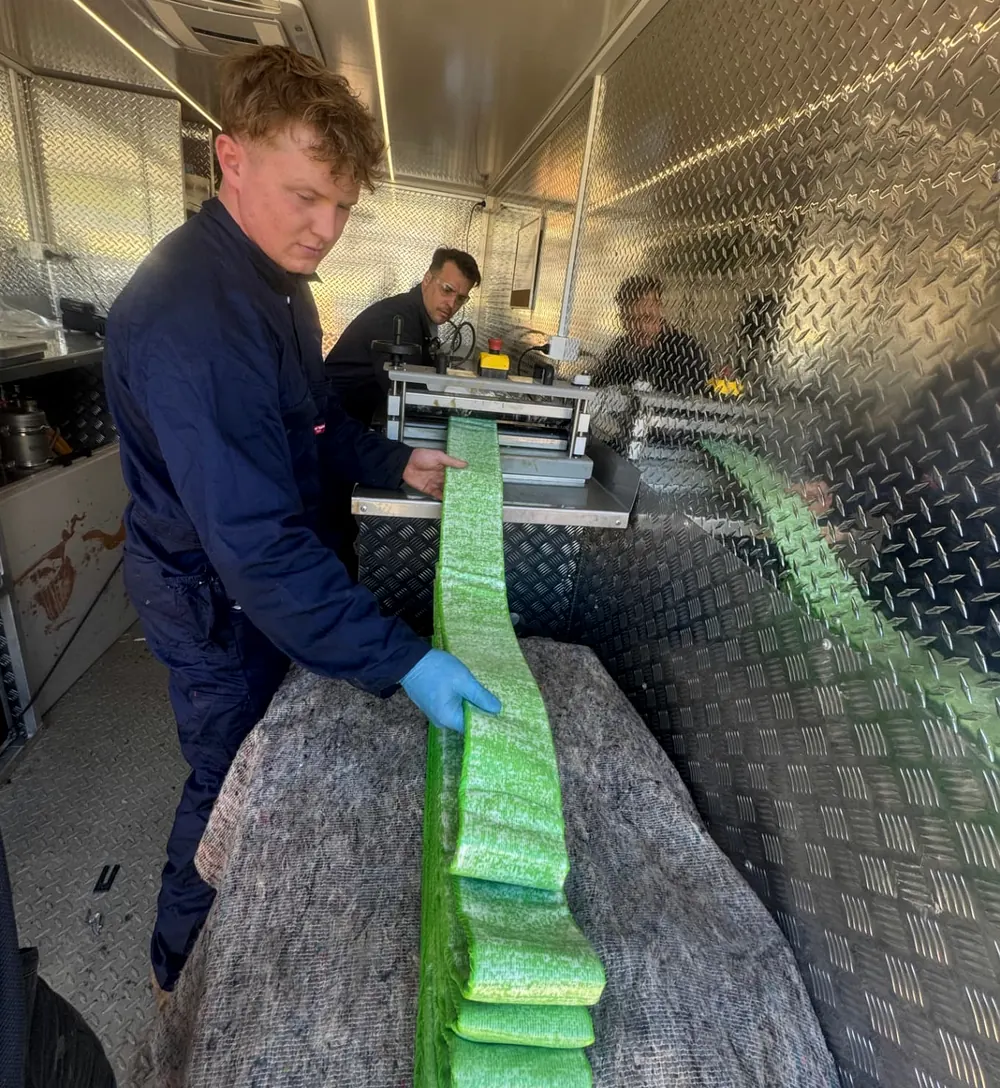
These images show specialist inversion equipment being used during a genuine Prevail Plumbing relining job.
Connected drainage services
Inspection, clearing and repair choices
Relining is one possible repair pathway after CCTV evidence. Some drains are better suited to clearing, jetting, drainage repair or conventional excavation.
Frequently asked questions
Pipe relining questions
What is pipe relining?
Pipe relining is a drain repair method that installs a resin-impregnated liner inside a suitable existing pipe, creating a new structural lining through the repaired section.
Is pipe relining completely excavation-free?
It is commonly described as a no-dig pipe repair because it can reduce excavation. Some jobs still need limited access work, junction reinstatement or excavation depending on the drain condition and site layout.
How do you know whether a drain can be relined?
We inspect the drain with CCTV, assess the pipe shape and condition, check access and junctions, then explain whether drain relining is technically suitable.
Can tree-root-damaged pipes be relined?
Some root-affected pipes may be suitable after root cutting and cleaning, especially where roots have entered through joints or cracks. The pipe still needs to be inspected and prepared first.
Can a completely collapsed pipe be relined?
A completely collapsed or severely displaced pipe usually cannot be relined without other repair work. We inspect first and explain whether excavation or replacement is required.
Do you inspect the drain with CCTV first?
Yes. CCTV drain inspection is used to identify the defect, measure the repair area and confirm whether sectional pipe repair or a longer liner is appropriate.
Is relining suitable beneath driveways or landscaping?
It may be suitable beneath driveways, paving, landscaping or floors where the pipe condition allows a liner to be installed and cured correctly.
Can you complete sectional pipe repairs?
Yes, sectional pipe repair can be considered for localised defects. Longer liners may be recommended where the surrounding pipe condition also needs repair.
What happens after the liner is installed?
The liner is allowed to cure, applicable junctions or connections in the agreed scope are reinstated where required, and the finished section is checked internally.
Do you provide before-and-after CCTV footage or reporting?
Where included in the agreed scope, CCTV footage, photos or reporting can be provided to show the defect and the completed repair.
Pipe assessment
Recurring blockage or damaged drain?
A CCTV inspection can identify whether the problem is caused by a structural defect and whether pipe relining is a suitable repair option.
Need CCTV before deciding?
If the defect has not been inspected yet, start with camera inspection and a clear repair recommendation.